
Service area pages often begin as an SEO project and end as a credibility problem. A contractor wants to be found in ten nearby towns, so the website gets ten pages built from one template. The city name changes, but the advice, service claims, and photos do not. A homeowner may not know how the pages were produced, yet they can tell when a company is speaking from experience and when it is simply filling space. AI can help create stronger local pages, but only when the workflow starts with evidence the business already owns.
A service area page must earn its location
A useful local page does more than confirm that a company serves a city. It helps a prospective customer understand whether the contractor is a sensible fit for the property, service need, and timing involved.
That requires information a generic writing tool cannot safely invent. A roofing company may see different roof ages across nearby communities. An HVAC firm may face longer travel windows in an outer suburb. A remodeler may know that certain municipalities add permit or inspection steps. These details make a page local because they affect the work, not because they repeat a place name.
The standard should be simple: if the location name were removed, would the page still contain useful information that clearly belongs to that market? If not, the page probably has not earned a place on the site.
Map real coverage before drafting content
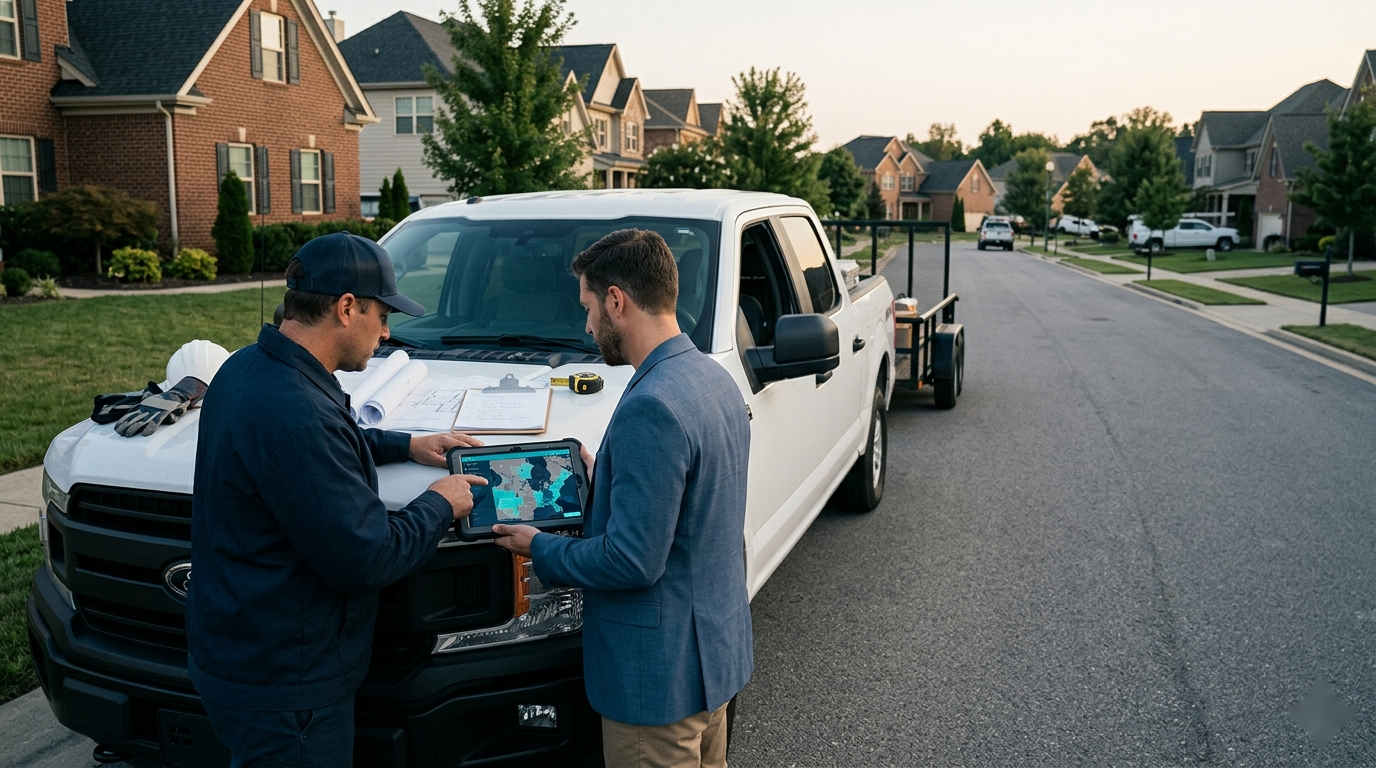
The first input is not a prompt. It is an honest service map. Contractors should separate the places they actively serve from areas they occasionally accept and markets they only hope to enter.
For each location, document practical boundaries such as:
- services the company regularly performs there
- normal scheduling or travel expectations
- job types the company will not take
- license, permit, or inspection considerations that the team has verified
- the branch, dispatcher, or crew responsible for the area
This prevents the website from promising coverage the operation cannot support. It also helps the office handle calls consistently. A page should not say “fast service across the entire county” if dispatch routinely declines work at the edge of that territory.
Build a local source packet
AI performs best when it has a compact set of approved facts for each page. The source packet can be a short document maintained by the owner, marketing lead, or office manager. It does not need to be polished.
Start with recurring customer questions, common property conditions, typical service requests, seasonality, scheduling realities, and any verified proof from completed work. Sales notes, call tags, technician observations, review themes, and project records are often more valuable than a generic city summary.
The packet should also list prohibited claims. If the company has not verified a permit rule, neighborhood restriction, response time, or local project example, the draft should not state it as fact. This negative list is important because AI can make uncertain material sound unusually confident.
Use one architecture without cloning one page
A repeatable structure improves quality control, but it should organize unique evidence rather than multiply identical prose. A strong page architecture can include several distinct blocks.
Service fit
Explain which services are available in the area and what types of customers or properties are the best match. This is more useful than a long catalog copied from the main services page.
Local operating context
Describe the verified conditions that affect scheduling, equipment, materials, access, permitting, or project planning. Include only details that matter to the customer’s decision.
How the process works
Set expectations for the first call, site visit, estimate, approval, and scheduling. The process may be similar across markets, but the page can highlight local handoffs or constraints where they exist.
Proof and questions
Add evidence the company can stand behind: relevant project types, original photos, customer feedback, or specific FAQs gathered by the office. Proof should support the page, not decorate it.
Give AI an editorial job, not a research job
The safest role for AI is to organize approved inputs, identify missing information, and produce a clear first draft. It should not be asked to “make the page sound local” without a factual source packet. That instruction rewards invention.
A practical drafting prompt can specify the location, service, audience, approved facts, prohibited claims, and desired page structure. It should also tell the tool to flag gaps instead of filling them. For example, the prompt might require a short service-fit section, two locally grounded planning considerations, three real customer questions, and a clear next step. If there is not enough evidence for one of those blocks, the draft should mark it for review.
This creates a useful division of labor. The contractor supplies operational truth. AI supplies structure, variation, and editing speed. A human decides what is accurate enough to publish.
Review the claims most likely to damage trust
Every local page needs a human review, but not every sentence carries the same risk. Focus attention on claims about licensing, permits, financing, warranties, emergency availability, response times, service radius, and completed local work.
The reviewer should be able to point to a reliable source for each important claim. If a statement comes from a technician’s memory, confirm it. If it describes a municipal requirement, verify it with the appropriate authority before publication. If a project is mentioned, make sure the company has permission to use the details and images.
Tone also matters. A contractor can show local familiarity without pretending to be based in every town. Straight language such as “we regularly schedule work in this area from our nearby service team” is more credible than manufactured neighborhood intimacy.
Publish according to evidence density
Do not launch twenty pages simply because AI can draft them quickly. Rank locations by how much real evidence the business has and how commercially important the market is.
Start with a small group of pages supported by frequent jobs, clear service demand, original material, and reliable office knowledge. That gives the team a manageable review load and creates a standard for later pages. Locations with thin evidence can remain on a general coverage page until the business develops enough firsthand knowledge for a dedicated resource.
The same discipline should guide internal links. A service area page should connect to the relevant service page, useful guides, and a clear contact path. It should not sit in an isolated block of location links built only for crawlers.
Measure lead quality, not just page count
Traffic alone does not show whether a local page is helping the business. Track which pages generate calls or forms, whether those leads fall inside real coverage, which services they request, and how often they become qualified opportunities.
Office feedback is especially useful. If one page repeatedly attracts jobs the company does not perform, its positioning is wrong even if visits are rising. If customers arrive with clearer expectations and the right service need, the page is doing valuable work before the phone rings.
Review the pages on a regular schedule. Update service boundaries, questions, proof, and calls to action as the operation changes. Remove or consolidate pages that no longer have enough value to justify themselves.
A practical operating rhythm
Contractors do not need a large content team to maintain this system. A focused monthly rhythm is enough:
- collect new call questions and field observations
- update source packets for the most active markets
- draft or refresh one small batch of pages
- verify high-risk claims and local proof
- publish only what passes review
- compare lead quality with the previous period
This turns service area content into an operating asset rather than a one-time SEO upload. It also keeps AI work connected to the people who understand the market best.
Build fewer pages that deserve to rank and convert
Service area pages with AI work when the technology amplifies real local knowledge. They fail when scale replaces substance. Start with an accurate coverage map, collect firsthand evidence, use a controlled page architecture, and keep human approval around every meaningful claim. The result is not merely more location content. It is a clearer promise about where the company works, what it can do there, and why a homeowner should trust the next step.